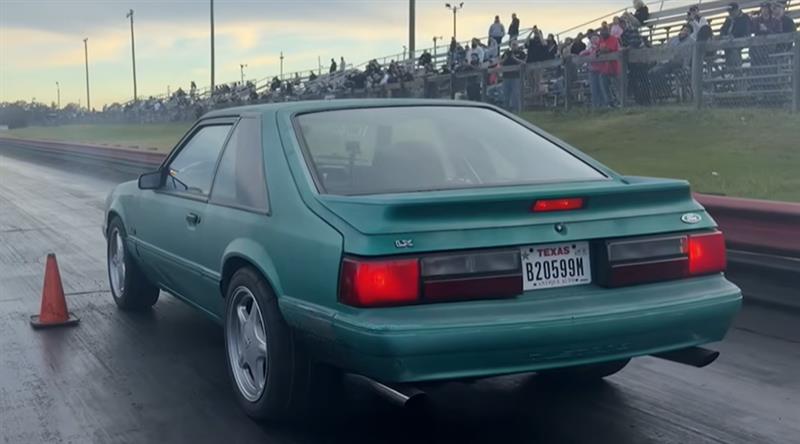
At the time of this video, it's been nearly 3 years since we completed the Godzilla swap into our 1992 patina Calypso hatchback dubbed Green Goblin. What started out as a simple car guy curiosity transformed into a full-on swap project. We're glad that we laced up the boots and saw this one come to fruition. Recent additions to the car have been power brakes, power steering, front and rear sway bars, Maximum Motorsports rear lower control arms with perch adjustment, and a set of 17" silver Pony wheels.
Riding and Driving the Godzilla-Swapped Fox Body, Green Goblin
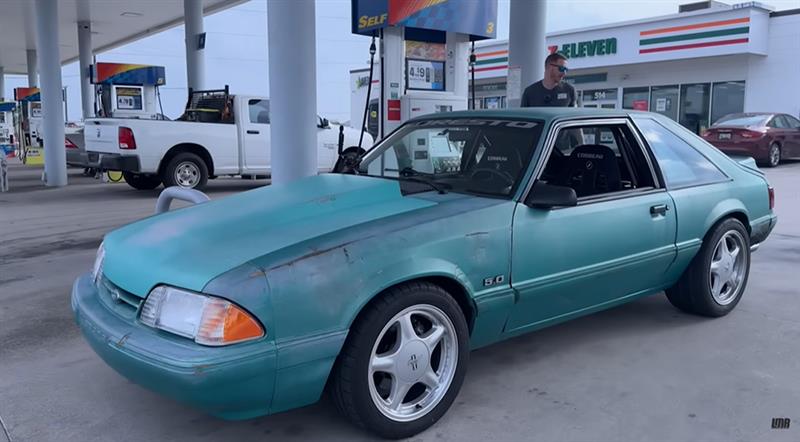
The first stop before any proper drive is fuel. For the Green Goblin, that means 93-octane premium, only the best! At the time of filming, premium fuel in Texas was hovering around $3.69 a gallon, which definitely stings a little. With the tank sitting just under a quarter full, it was time to top it off and hit the road. Miles per gallon? That’s not really the point here, but if we had to guess, somewhere in the low 20s isn’t out of the question. One of the best parts? This car runs max A/C without breaking a sweat. With the tank full, the Green Goblin was ready to roll.
Introduction to the Green Goblin
Welcome to the ride and drive of the Green Goblin, a 1992 patina Calypso hatchback powered by Ford’s 7.3L Godzilla engine backed by a 6R80 automatic transmission. It’s been quite a while since this car last appeared on the channel, with the previous major update dating back to early 2023. That outing marked the car’s first trip to the drag strip at Little River Dragway, where it laid down some impressive eighth- and quarter-mile passes during its maiden voyage.
That first track day consisted of around 18 passes, all in good conditions, and set the benchmark for what the car was capable of in its initial form. Since then, the Green Goblin has evolved, and we now have fresh data from 2025 to compare its performance with added creature comforts and refinements.
How the Build Came Together
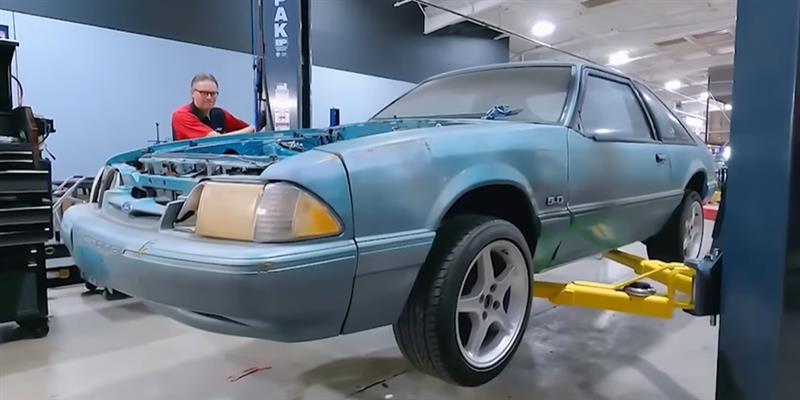
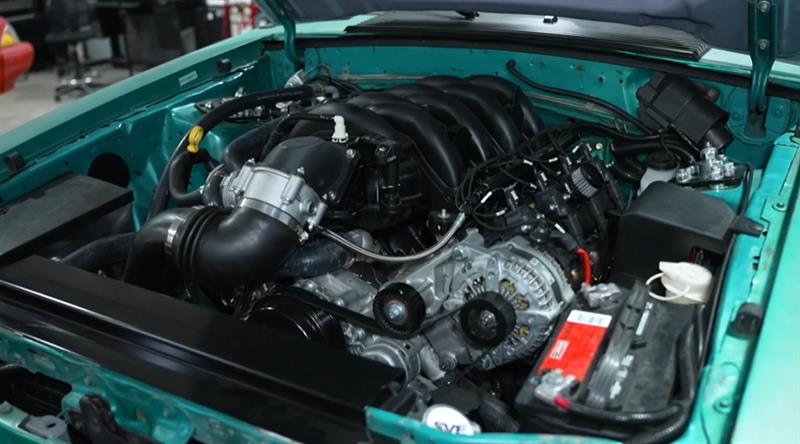
The Green Goblin started life as nothing more than a bare Fox-body shell used for research and development. When Ford debuted the Godzilla engine, its first cam-in-block pushrod V8 since the early 2000s, we ordered one immediately. From there, the swap began to take shape as supporting components became available.
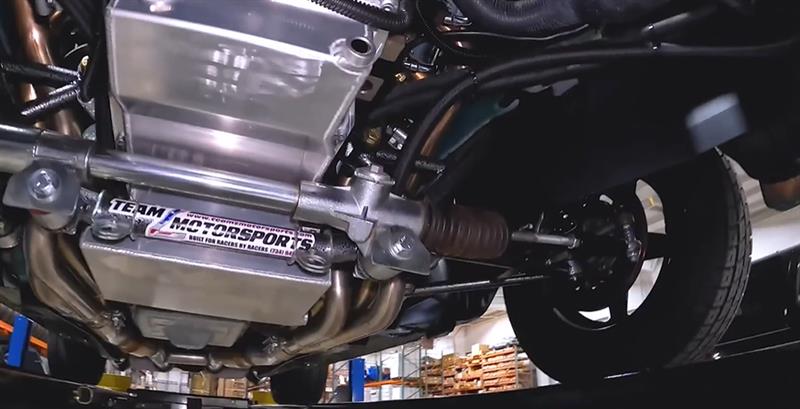
Key parts that made the swap possible include Ultimate long-tube headers, a 417 Motorsports Godzilla swap oil pan, OBR control pack, and a Team Z Godzilla swap K-member. Power is sent through a 6R80 automatic transmission controlled by a Quick Shift controller. Fuel delivery is handled by a modified SVE Coyote swap fuel system adapted specifically for the Godzilla.
Originally, the car ran manual steering and brakes, front coilovers, rear SVE springs, and Team Z suspension components. The interior was completed using donor parts from around the shop and refinished in black using the Lomar paint system, resulting in a surprisingly clean and cohesive finish. What emerged was a fully functional, completed Godzilla-swapped Fox body.
Godzilla vs. Coyote: The Torque Argument
One of the most common comments surrounding the car is the inevitable comparison to a Coyote swap. While Coyotes can make excellent horsepower, the Godzilla brings something entirely different to the table: torque. With roughly 480 lb-ft on tap, the Godzilla outmuscles a typical naturally aspirated Coyote by nearly 100 lb-ft.
On the road, that difference is undeniable. A quick 40-to-80 mph pull happens almost instantly, delivering a punch that throws you back in the seat. The Godzilla feels more like a positive-displacement supercharged setup, delivering power immediately rather than building it at high RPM. While the Coyote excels in rev-happy, high-RPM performance, the Godzilla is all about low-end and mid-range brutality. At the end of the day, it comes down to personal preference, but the torque is hard to ignore.
Adding Creature Comforts and Refining the Setup
The focus of this ride and drive was evaluating the car with added creature comforts. Weight savings took a back seat to drivability. Power steering and power brakes were high on the priority list, transforming the car from a workout into a one-finger cruiser.
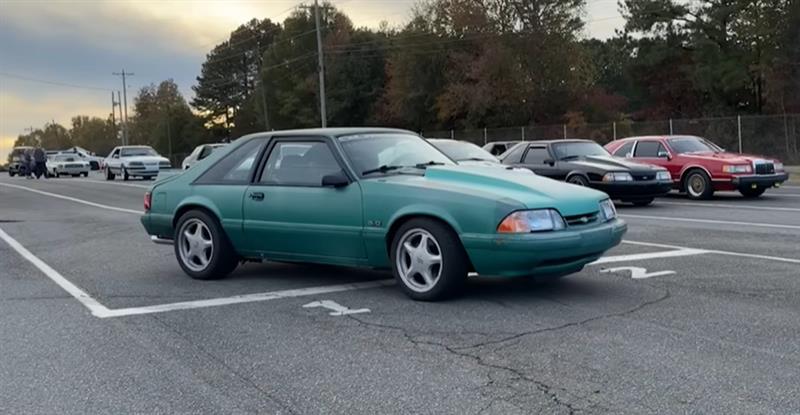
Ahead of Foxtoberfest 2025, the Green Goblin also received a visual refresh. The gloss-black drag wheels were swapped for silver 17-inch Pony wheels, wrapped with Mickey Thompson front tires and drag radials in the rear. The rear suspension was upgraded with Maximum Motorsports weight-jacker lower control arms, allowing precise ride-height adjustment without converting to a coilover setup. With power steering, power brakes, suspension tweaks, and the new wheel and tire package in place, the car was ready for a long haul.
Foxtoberfest 2025 and Track Performance
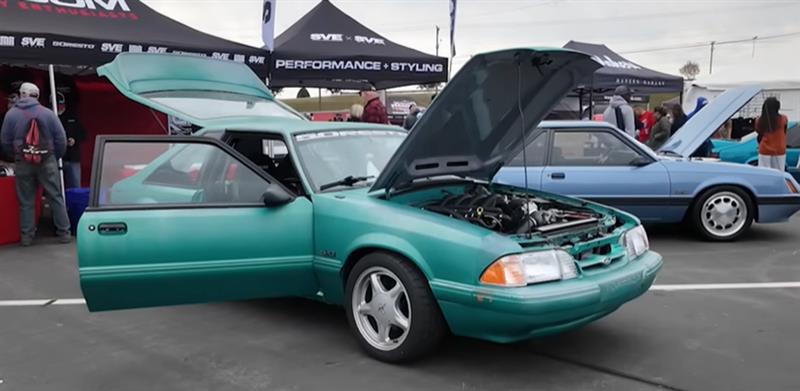
The Green Goblin made the trip from Texas to North Carolina for Foxtoberfest 2025, including some real road miles along the way. Aside from a minor power-steering fitting issue that caused a brief fluid leak onto a header, the car performed flawlessly after a quick fix.
Once in North Carolina, the car was driven everywhere from the drag strip at Mooresville Dragway to local spots like Patch Brewery. On track, the goal was to see how the added weight from creature comforts affected performance.
At Little River Dragway in 2023, the car’s best eighth-mile pass was a 7.15 at 96.77 mph with a 1.64 sixty-foot time, translating to roughly an 11.18 quarter-mile. At Mooresville Dragway, with the updated setup, the car ran a best of 7.28 at 95 mph with a 1.62 sixty-foot time. That slight difference was impressive considering the added weight.
Originally, the car weighed just under 3,200 pounds with a full tank of fuel. With the new setup and roughly a quarter tank of fuel, the car tipped the scales at 3,219 pounds. Accounting for fuel differences, the added components increased the car’s weight by roughly 100 pounds, a small tradeoff for significantly improved drivability.
Final Thoughts on Green Goblin
The Green Goblin represents what’s possible when you commit to seeing a project through. What began as a bare shell with numerous unknowns became a fully functional, street-drivable, Godzilla-powered Fox body that performs equally well on the road and at the track.
The torque is addictive, the drivability is night and day better with power steering and brakes, and the car simply works. It’s the kind of build you don’t fully appreciate until you experience it firsthand, whether from the driver’s seat or the passenger side.
There’s still room to grow, rear gearing, boost, and future upgrades are all on the table. For now, the Green Goblin rips, cruises comfortably, and proves there’s no single “right” way to build a Fox body. Let us know what you think, what you’d change, and what you’d like to see next for the Green Goblin!