
SHOP

All Mustang Parts
Free Shipping on qualifying orders over $99* Details
LMR showroom & will call pickup service will be closed beginning Monday 9/21/26 for renovations until further notice. Need help? Contact Us.

Dyno Correction Factors Explained!

Created by Andrew Perry / 5 min read
Date Created: 2/6/2026
Last Updated: 2/6/2026

Here we explain the differences between SAE, STD, and uncorrected dyno correction factors.

Viewing this install and using the information shared is subject to the terms set forth here - View the LMR Install Instructions Disclaimer.
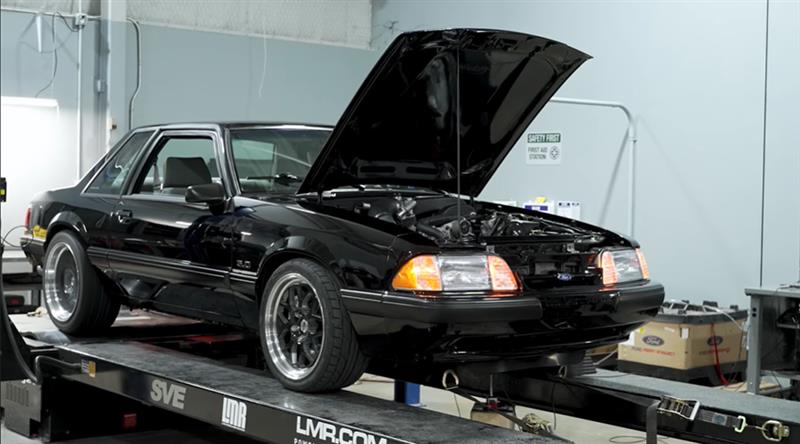
Dyno numbers get thrown around all the time, but they’re rarely as straightforward as people think. The same car can show different horsepower and torque numbers depending on where it’s dynoed, the weather that day, and even how the dyno software is set up. That’s why correction factors exist, to give us some kind of baseline so we can compare results more fairly. The key thing to understand is that dyno numbers are contextual. Without knowing how they were calculated, the number by itself doesn’t tell the full story.

Watch

Product Links

mustang-lightning-bronco-raptor-dyno-correction-factors-explained_edb3c051.jpg (800×444)


Uncorrected Numbers and Real-World Conditions

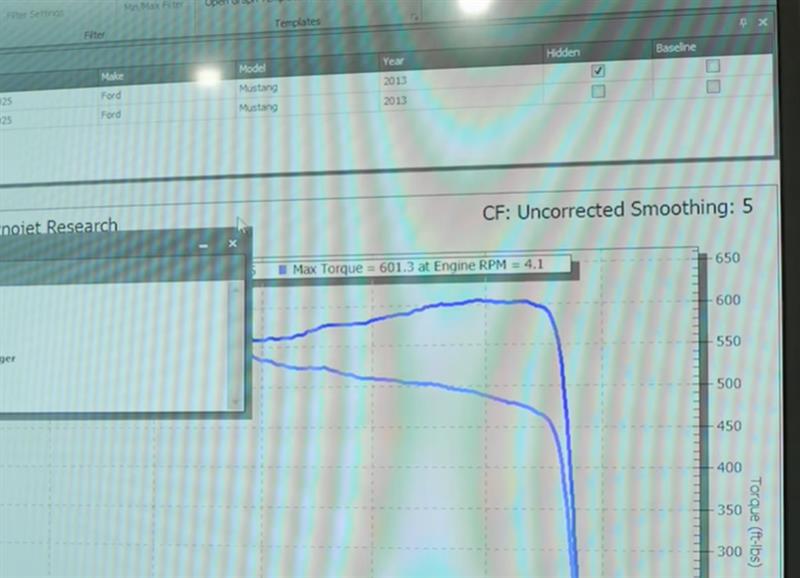
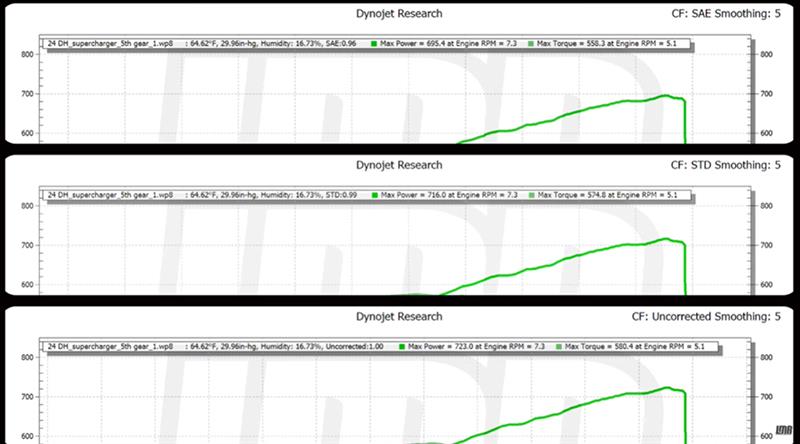
Uncorrected numbers are the simplest to understand because there’s no calculation involved. Whatever horsepower and torque the car makes at that moment is what you see on the screen. The downside is that those numbers are always changing; time of day, time of year, temperature, humidity, and pressure all play a role. Heat soak is a big one, too. A car that’s been driven around and is fully heat-soaked is not going to make the same power as a car that’s cooled off and making a clean pull. That’s real-world performance, whether people like the number or not.

mustang-lightning-bronco-raptor-dyno-correction-factors-explained_082d3297.jpg (800×578)

SAE vs. STD - Why the Numbers Change So Much

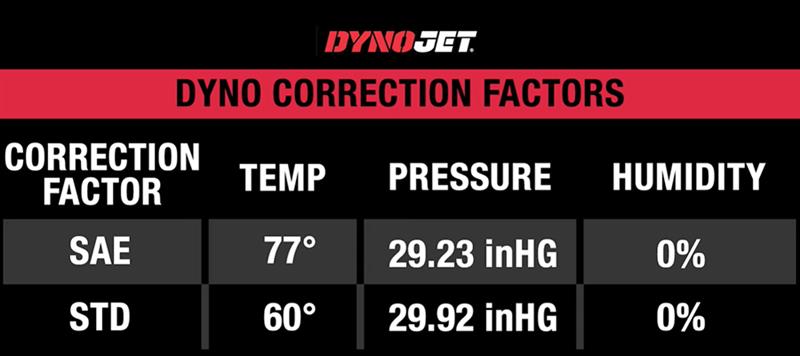
Once you start applying correction factors, the two most common ones you’ll see are SAE and STD. SAE is the standard most manufacturers use when advertising horsepower and torque, which is why many shops consider it the modern gold standard. STD is an older correction factor that assumes cooler air and higher barometric pressure. Because of that, STD almost always shows more power than SAE. Nothing changed with the car, only the math did. That’s also why some dyno sheets look better than others, depending on which correction factor was selected.

mustang-lightning-bronco-raptor-dyno-correction-factors-explained_c1bcfabb.jpg (800×356)

Smoothing and How the Graph Is Displayed

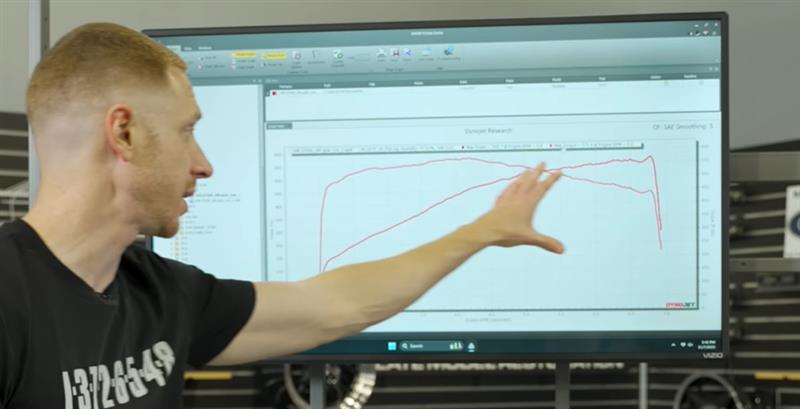
Smoothing doesn’t change how the car runs, it just changes how the data is displayed on the graph. Higher smoothing levels make the graph look clean and easy to read, while lower smoothing shows more detail and looks rougher. As you lower the smoothing number, you’ll usually see small increases in horsepower and torque, especially on higher horsepower cars. The differences aren’t huge, but they’re there. Most people stick with higher smoothing because the graph looks better and the results are more consistent.

mustang-lightning-bronco-raptor-dyno-correction-factors-explained_c83151ce.jpg (800×409)

What Dyno Numbers Really Mean

At the end of the day, dyno numbers are just a tool. You can make the same car look very different by changing correction factors, smoothing levels, or the conditions it’s run in. A cooled-off “hero run” might post big numbers, but that doesn’t mean the car will make that power every time you drive it. Looking at uncorrected, SAE, and STD results together gives a better overall picture of how the car actually performs. Once you understand that, dyno graphs stop being something to argue about and start being something you can actually learn from.

mustang-lightning-bronco-raptor-dyno-correction-factors-explained_a68e6c68.jpg (800×444)


About the Video

Dyno Numbers Explained: SAE vs STD Correction Factors

Check out our YouTube channel for even more tech tips, installation videos, how-tos, and more. The best place to go for anything Mustang related!

Published on 2025-11-11
In this video, Landan explains the differences between SAE, STD, and uncorrected dyno correction factors.
Thumbnail image of the author of this article, Andrew Perry.

About the Author

Andrew has been writing content for Late Model Restoration for over 2 years, producing over 50 articles. Over the years, Andrew has owned numerous Mustangs, including a 2007 V6, 2003 GT, 1967 GT, 1994 GT, 1995 GT, 2014 GT (2), 2000 V6 (V8 swapped), 2016 GT/PP, 1988 LX 5.0, and a 2009 GT/CS. Read more...