As you plan your
Coyote Swap Mustang project, there are going to be a few things you will need to consider that could affect other aspects of your swap. For example, the type of headers you choose will dictate what K-member and mid-pipe you will need and how easy it is to work on your vehicle in the future.
The two choices you have for
Coyote swap headers are shorty headers and long tube headers. Each has its benefits and drawbacks, so knowing what you gain and what you sacrifice can help you determine which style will fit your build’s goals and budget. Let’s dive into each header type and what you can expect from each choice.
What Are Shorty Headers?
Shorty headers are aftermarket headers that closely resemble the factory exhaust manifold. They will often have larger diameter tubing that is less restrictive than factory manifolds, allowing for more exhaust flow, resulting in more power. Our
SVE Coyote Swap shorty headers are designed to run a stock 96-04 mid-pipe, but other shorty header options will require you to have a custom mid-pipe made.
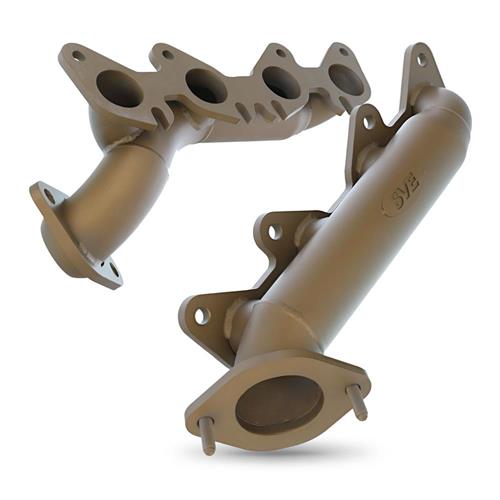
Due to the design of a shorty header, you will get less of a power gain when compared to long tube headers, but you will not have to purchase a specific mid-pipe as the factory 4.6L mid pipe will work for our SVE shorty headers. Another benefit to shorty headers revolves around serviceability. With a shorty header, only the mid pipe has to be removed to gain access to the starter andtransmission, unlike most instances with long tubes. Shorty headers also have more clearance under the vehicle on lowered cars, making them less susceptible to damage.
What Are Long Tube Headers?
Long tube headers are similar to shorty headers, but will have longer primaries to optimize low-end torque and create more power than shorty headers.
Long tube headers will require you to install a new, shorter mid-pipe to accommodate the longer length. When compared to shorty headers, long tube headers will be a little more expensive, require a more involved install, but will pay off with the power gains.
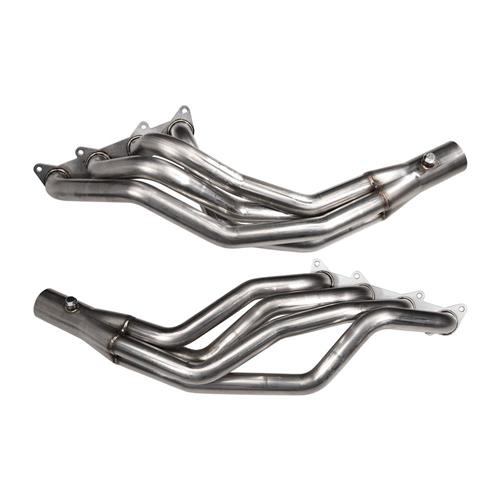
Since the primaries are longer on long tube headers, this often interferes with the removal of a starter or transmission. So if you need to remove the transmission in your vehicle, your long tube headers will most likely need to be removed as opposed to just a mid-pipe with shorty headers.
Coyote Swap Shorty Vs Long Tube Comparison
So now that we know the difference between shorty and long tube headers, let’s look at how they compare for a Coyote Swap Mustang.
Fitment
When swapping a Coyote engine into your Mustang, fitment is key, as you may have different components from other swaps. Space savings are nice, but some people may choose a tighter fit to produce a little more power.
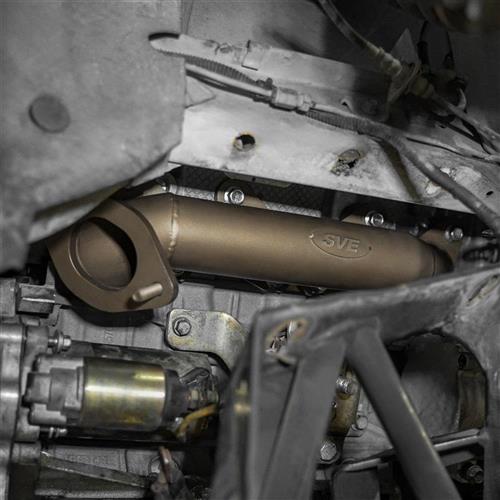
Shorty Headers - With our new SVE Coyote Swap Shorty Headers, you can run your factory 96-04 4.6L K-member and mid-pipe when Coyote swapping a 1996-2004 Mustang. If you are swapping a Fox Body, these Shorty Headers can be used when using a 96-04 4.6L K-member and mid-pipe. You will need a
Coyote swap oil pan for proper K-member clearance. Of course, you can still use these headers if you already have an
aftermarket K-member as well.
Long Tube Headers - Many Mustang Coyote Swap long tube headers available at the time of this article will require the use of an aftermarket, tubular K-member. When purchasing your long tube headers, you will most likely need to determine what K-member and/or transmission you plan to use. Most long tube headers will be specific to the transmission and K-member they were built for.
Price
Price is often one of the biggest factors when swapping any engine, but especially a
Coyote engine, where you may have a heftier price tag than a junkyard pushrod swap.
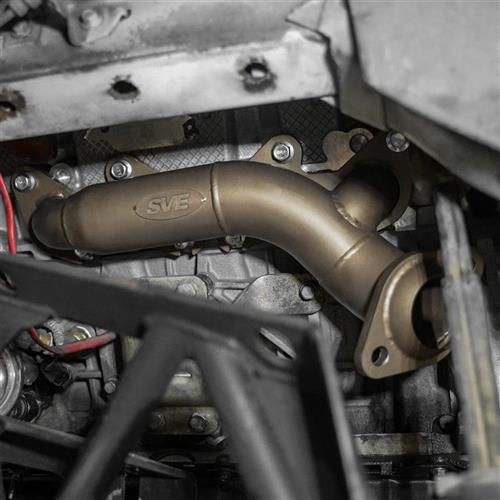
Shorty Headers - If you are looking for a budget-friendly header and want to save money by not having to purchase a new mid-pipe and K-member, the SVE Shorty Headers are going to be your best bet. Shorty headers range anywhere between $500-$700 and at the time of this article, these headers are going to be competitively priced with the extra benefit of not having to purchase a tubular K-member and mid-pipe.
Long Tube Headers - Long tube headers are going to be a little pricier when compared to shorty headers, as they have longer primaries and are built to fit specific setups. Mustang Coyote Swap long tube headers can range anywhere from $400-$1,800, depending on the brand. These headers will net you the most power, so spending the extra money is worth it if you are chasing horsepower numbers.
Performance
Performance is going to be one of the most important aspects of most builds, so it is important to weigh this against cost and fitment.
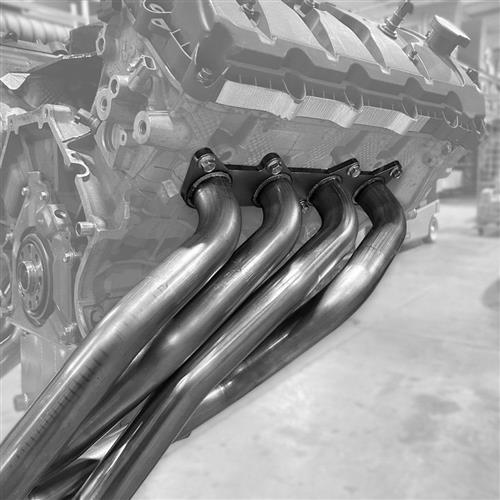
Shorty Headers - When it comes to power, shorty headers will make less power compared to long tube headers, but are a great choice for those who want to complete their build without having to purchase a new mid-pipe or K-member. Shorty headers will still allow for performance gains over factory Coyote manifolds and have many benefits for a variety of builds.
Long Tube Headers - Long tube headers are going to give you the most power and performance when it comes to Coyote Swaps. While you will have to purchase a K-member and new mid-pipe, this is only going to help as you get more power and a lighter front end. Power numbers will differ from build to build, but you can always count on long tube headers outperforming shorty headers.
Which Is Best For Your Coyote Swap?
Well, that was a lot of talking points, but it still does not directly answer the questions of which is the best for your Coyote Swap. The answer is that it depends on your specific goals for your project car.
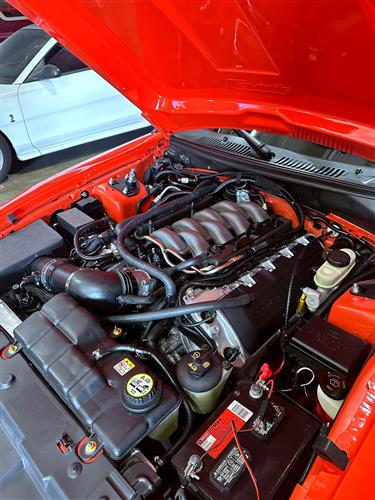
The SVE Shorty Headers are a great option if you want to save money on your project and aren’t chasing a specific horsepower number. They are a great way to get your project done and still have the possibility of upgrading to long tubes in the future with the addition of a tubular K-member. We ran these exact headers on our Coyote Swapped 2004 Mustang GT, where we used the factory mid-pipe and K-member, saving us hundreds of dollars.
Long tube headers are a great option if you either already have a tubular K-member or are planning on purchasing one for your project. While you can still run shorty headers with tubular K-members, long tube headers are usually worth the extra cash due to the performance gains you are going to get with them.
Conclusion
Taking all of these considerations into account, you should be able to determine which set of headers is going to be best for your Coyote Swap build. We here at LMR.com have done several of these Coyote Swaps and completely understand that this can be a tough decision to make. If you need assistance with your Coyote Swap questions, feel free to
contact our customer service team, and we will be more than happy to answer your questions.