Imagine you are driving your Mustang to work, and all of a sudden you notice your temperature gauge start to creep up. As the anxiety sinks in, you notice it quickly rising, forcing you to pull over and investigate the issue. Due to the complexity of your Mustang’s cooling system, there could be a variety of different issues causing your engine to overheat. To accurately diagnose the issue, you first need to understand what issues can cause an overheating scenario.
How Does My 1996-2004 Mustang Cooling System Work?
The cooling system in a 1996-2004 Mustang is comprised of the following components:
- Radiator
- Radiator Hoses
- Cooling Fans
- Heater Core
- Thermostat
- Water Pump
- Reservoir
- Coolant
When you start your car, the coolant that flows in the engine block heats up as it absorbs heat from the engine. Once the engine reaches a specific temperature, the thermostat opens up, allowing coolant to flow to the radiator. As air passes through the radiator, the coolant is cooled and returns to the engine. The cooling fans help to draw air through the radiator, while the water pump keeps the coolant moving through the system. The heater core acts similarly to a radiator by allowing coolant to flow through it and using a blower motor to blow the hot air into the cabin. As coolant heats up, it expands and is stored in the expansion tank or coolant reservoir until it is used again.
What Can Cause My 1996-2004 Mustang To Overheat?
Now that we know how a cooling system works, let’s look at each component and see what to look for when troubleshooting an overheating issue.Coolant
One of the most obvious things to check is your coolant level and condition. After all, with little to no coolant, your engine cannot cool down, causing it to overheat. Over the years, it is very easy to forget to check or change your coolant, and with these cars changing hands over the years, you may not know when the last time it was serviced.
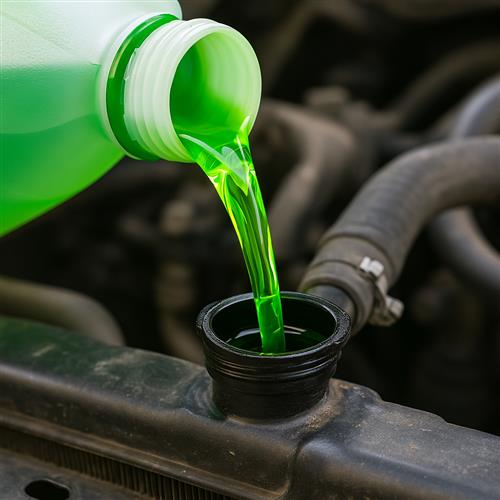
What To Look For: When checking your coolant, ensure that the vehicle has fully cooled down to safely inspect the coolant. Check your coolant levels first to ensure it is within the proper range. Next, you will want to check the color and condition of your coolant. While this could be a few different colors depending on what previous owners have used, you want to ensure it is not dirty or very opaque, which could indicate old age.
How To Fix: If you notice your coolant is good but low, simply top it off. If your coolant is dirty or looks old, you will most likely need to flush the system and refill it with new coolant.
Radiator Issues
When it comes to your radiator, this is usually the source of many overheating issues for the 1996-2004 Mustangs. Having changed a few New Edge radiators in my day, I can be the first to tell you that over a couple of decades, the factory radiators can develop leaks, blockages, and damage from road debris.
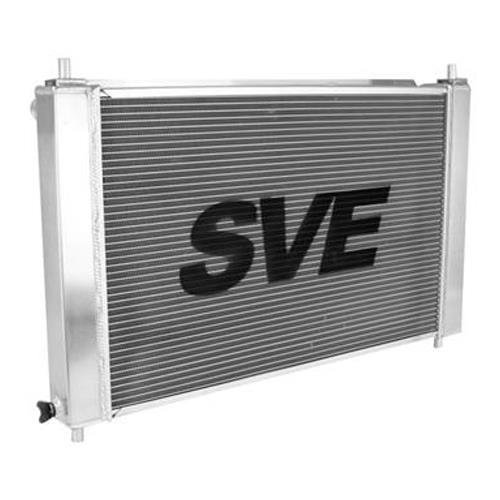
What To Look For: Check over the front of your Mustang to ensure nothing is blocking the flow of air, such as a grocery bag or other obstruction. If this is clear, you can check directly under your radiator for any signs of leakage coming from the radiator itself. Lastly, once the car has cooled off, inspect all sides of the radiator for any signs of damage.
How To Fix: If your radiator is leaking, is damaged, or has an internal blockage, it is recommended to replace your radiator. We offer a great direct replacement, SVE 3-row aluminum radiator to give you more cooling capacity and a direct-fit install. We have even put together a video to help you make this quick fix.Radiator Hoses/Heater Hoses
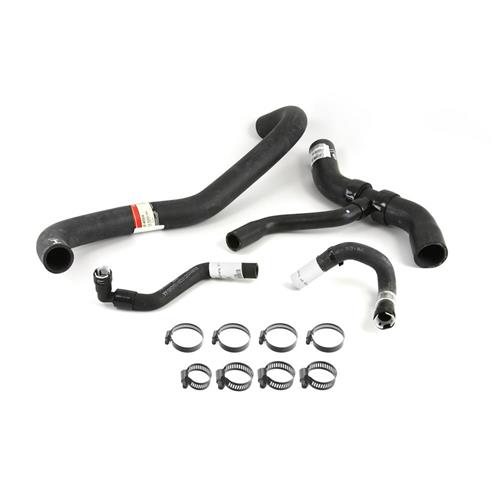
The next area you will want to inspect is your radiator and heater hoses. This is another area that can wear down over the years, causing a leak or completely failing altogether. Your radiator hoses and heater hoses are responsible for transporting hot coolant throughout your cooling system, so they certainly see a lot of wear and tear.
.
What To Look For: Inspecting your radiator hoses can be a little tricky due to their position. With the car cooled down, you will want to look over each hose for any signs of bubbling, cracking, or collapsing. Any abnormal or leaking coolant hose should be replaced to ensure you do not have a larger issue in the near future.
How To Fix: Replacing a radiator hose is quite easy, but could be messy, depending on which hose it is. We offer full radiator hose replacement kits and individual hoses in case you need to replace just one hose. Replacing a radiator hose should only be done when the engine is completely cool, and you will need to ensure you have a catch pan ready to catch any coolant that may come out of the hose.Water Pump
Water pumps are a cooling system component that should be replaced every 60,000 to 100,000 miles, depending on the vehicle. When these fail, they can quickly cause overheating issues, and it can be a little tougher to diagnose. When water pumps fail, they usually fail at the gasket, or the internal impeller disintegrates.
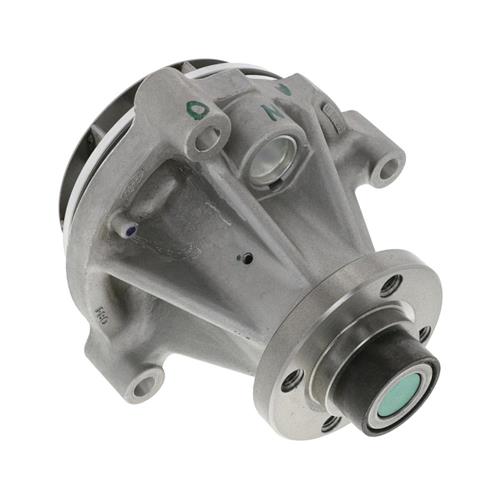
What To Look For: Diagnosing a failing water pump includes looking for leaks around the gasket, checking for play in the shaft, and looking for coolant dripping out of the weep hole (if equipped). When checking for play in the shaft, you will need to loosen or remove the accessory drive belt.
How To Fix: To fix a failing or failed water pump, you will need to completely remove it from the engine and replace it with the correct water pump and gasket. This is a good time to go ahead and check the condition of your coolant and replace your thermostat while you are there for added insurance.
Note - There were two different styles of water pumps used on the 1996-2004 Mustang 4.6L engines - a short style and long style. It is always recommended to check your water pump to confirm which style you have.
Short Style Fitment- Fits 2001-2004 Mustang 4.6 2V
- Fits 2001 Mustang Cobra
- Fits 2003-2004 Mustang Mach 1
- Fits 2003-2004 Mustang Cobra
Long Style Fitment- Fits 1996-2001 Mustang 4.6 2V and 4V
- Fits 2005-2010 Mustang 4.6 3V
Thermostat/Thermostat Housing
The thermostat on an engine is responsible for opening at a certain temperature to allow coolant to flow into the radiator. This is done to regulate engine coolant temperatures and can make or break your cooling efficiency. Thermostats can become stuck open or stuck closed, each having adverse effects on your engine. A thermostat that is stuck open will not get to temperature correctly, and a thermostat that is stuck closed will not allow coolant to flow to the radiator, causing it to overheat.
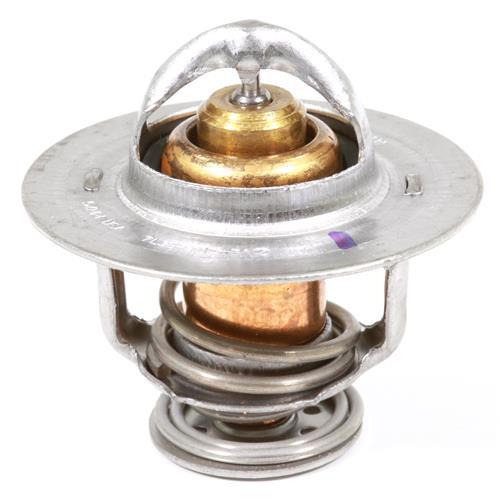
What To Look For: If your car is taking longer than usual to heat up or is overheating, these could both be symptoms of a failed thermostat. You can use an infrared thermometer to measure the temperatures before and after your thermostat to determine whether or not your coolant is flowing past your thermostat.
How To Fix: Replacing a thermostat on a 1996-2004 Mustang is relatively easy and inexpensive, often making it something to do when addressing other coolant repairs. Once you have replaced it, you can use the same infrared thermometer method to confirm that it is operating correctly. Cracked Intake Manifold
A problem that has plagued many 96-04 Mustang GT owners is a cracked intake manifold. Due to the plastic design, the intake manifold on 4.6L 2Vs is susceptible to coolant leaks, especially if yours has a factory or a manifold with a plastic crossover. A redesigned metal crossover manifold was introduced over the years to solve this issue.
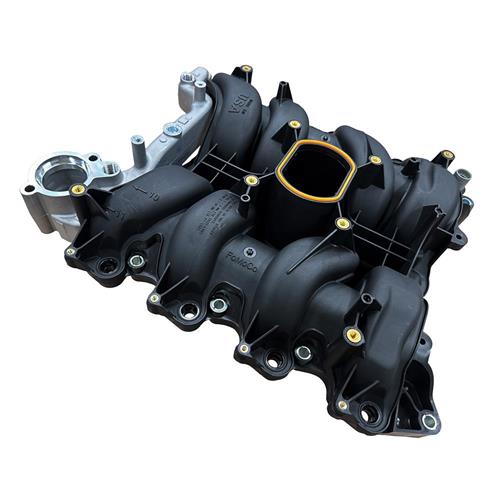
What To Look For: What you will be looking for is any type of coolant leak coming from the intake manifold. Many owners find coolant in spark plug holes or at the front of the manifold on intakes with the plastic crossover.
How To Fix: Unfortunately, the only way to remedy this is to replace the intake manifold. At LMR, we offer the newest Ford Performance PI intake manifold and a step-by-step guide on how to replace the manifold. Heater Core
One of the harder components to diagnose on your 1996-2004 Mustang’s cooling system is the heater core. This is due to the location being inside the HVAC box, which is located inside your dashboard. The heater core is responsible for heating your cabin when you select heat and can often fail on high-mileage vehicles.
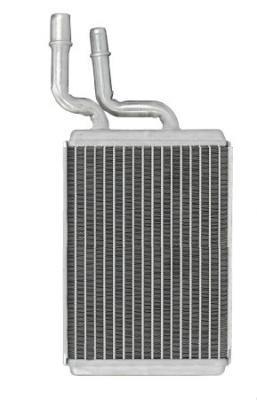
What To Look For: When a heater core fails, you will most likely notice your heater not working, accompanied by a sweet coolant smell in your cabin. This comes from the coolant dripping out of the heater core and onto the passenger side floorboard. You will often experience a damp spot on the carpet in the area as well.
How To Fix: You won’t like the answer for this, but removing the entire dashboard will be required for this fix. Luckily we have done this and show you step-by-step on how to remove and install a heater core in a 2001-2004 Mustang. Electric Fans
When Ford switched from the Fox to the SN body style in 1994, they moved away from belt-driven cooling fans and went with electric fans. Electric fans provide many benefits over belt-driven fans, but can come with their own set of problems as well. These fans are designed to bring air through the radiator and assist in cooling your engine.
The cooling fan harness is another area to look at as these can become shorted out and melt over time.
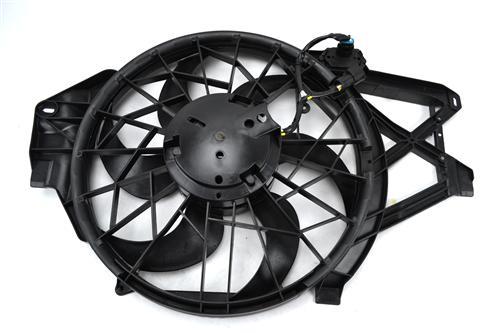
What To Look For: There are several things you can look for when your electric fans stop working. You can look at the fan itself to ensure no damage, blockage, or issue that would cause the fan not to turn. If the fan can spin freely but does not kick on when your vehicle gets to operating temperature, you can check the wiring for any signs of damage, melting, or connectors that have been disconnected. You can use a multimeter to test if your cooling fan is operating correctly as well.
How To Fix: Depending on what is causing your electric fan to not work, your fix may vary. For most, replacing the entire fan assembly will be required. If it is an electrical issue such as a melted harness, you can choose one of our cooling fan wiring harness repair kits to make the fix.CCRM
The Mustang CCRM, also known as the Constant Control Relay Module, is a module found on the 1994-2004 SN95 Mustang that provides vehicle power to the powertrain control module (PCM) for various components on the Mustang. These components include the following:- Cooling Fan
- A/C Clutch
- Fuel Pump Driver Module (FPDM) power supply
- PCM Power relay
If you experience any issue where the PCM, cooling fan, air conditioner compressor clutch, or fuel pump is not getting power, the CCRM may be the culprit.
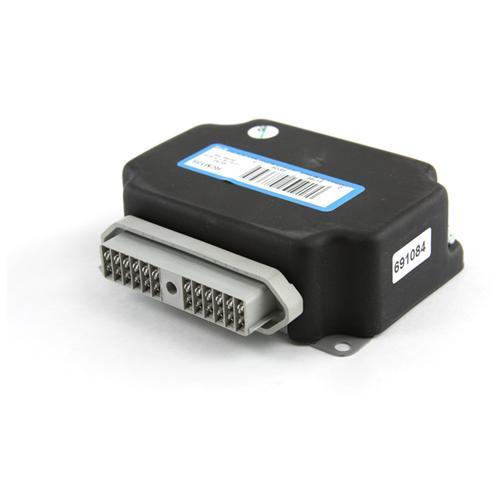
What To Look For: A malfunctioning CCRM may not always have visible damage, so you will need to test it with a multimeter to be sure.
How To Fix: To fix a bad CCRM, you will need to remove it and install a new CCRM. We have instructions on how to replace a CCRM to help make the repair. Radiator Air Deflectors
The radiator air deflector on 1994-2004 Mustangs is located at the bottom of the core support and helps to direct air into your radiator. While these are usually not the most common culprits for overheating issues, they are a part to remember when checking over your cooling system, as they get damaged and removed over the years.
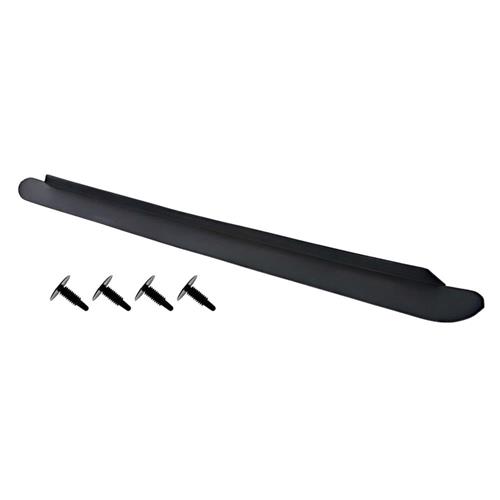
What To Look For: This one is pretty simple. You will simply look under your vehicle at the bottom of the core support to see if yours is present and in good condition. If it is missing or damaged, air may not be directed effectively to your radiator.
How To Fix: To install a new air deflector, you will simply purchase a new air deflector and install it using the included 4 push pins. This is a quick and easy fix that will both help your engine cool better and give your Mustang a better look if yours was damaged.Head Gasket Issues
Lastly, and the most dreaded, are head gasket issues. The head gasket is located between the head and the block, providing a seal for the combustion chambers and coolant passages. If this fails, coolant can seep into the cylinders and contaminate the oil and oil passages. This can also warp the cylinder heads due to the extreme temperatures when the vehicle overheats. This type of problem can total an entire car and will usually require extensive work to repair.
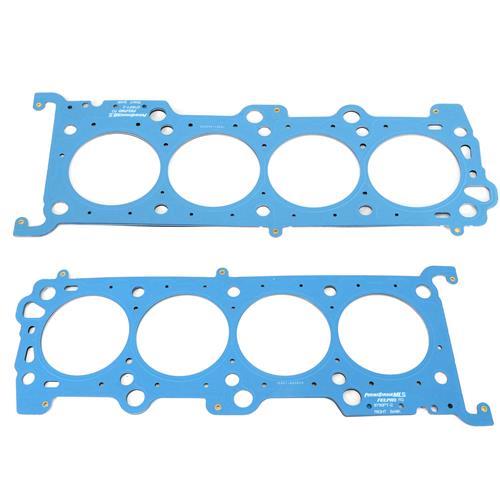
What To Look For: One of the most common symptoms is overheating with white smoke as coolant burns up in the exhaust. You will also notice that your engine oil appears milky or frothy, indicating the presence of coolant in your oil. Your engine will run rough and you will experience a decrease in power. You might also see coolant leaking from the mating point of your cylinder heads and block.
How To Fix: Replacing a head gasket is a very involved process and is often the reason that most people sell their vehicles. Not every fix will be the same due to the complexity of the failure, but most will require the disassembly of the top end of the engine.Conclusion
That about wraps up diagnosing an overheating issue on 1996-2004 Mustangs. As with any issue, if you are uncomfortable diagnosing or working on your vehicle by yourself, we highly suggest visiting a trusted shop. Taking care of your cooling system with regular maintenance can help prevent future and serious issues. Shop LMR.com for all of the 1996-2004 Mustang cooling system parts to keep your Mustang running cool!